



 Search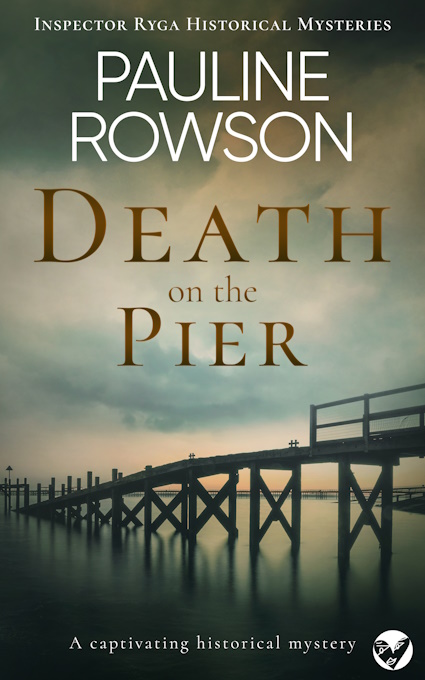
When I began researching Death on the Pier, I knew I wanted Inspector Ryga's sixth case to take him somewhere very different from the quieter coastal locations of his earlier investigations.
This time Ryga travels to Southend-on-Sea. It is July 1951 and the weather is scorching. Southend is crowded with holidaymakers and day trippers, many of them arriving from London to escape the grime and congestion of the capital.
And dominating the seafront is the pier. The longest pleasure pier in the world. Southend Pier had already been a remarkable attraction for decades by the time Ryga arrived.
The present iron pier was completed in 1889 and an electric railway began operating the following year. By 1898, an extension had made Southend Pier the longest pleasure pier in the world, stretching for 7,080 feet — around 1.34 miles.
By the 1950s, the pier railway was an attraction in itself.
And this wasn't simply a walk along a wooden structure over the water.
The pier had cafés, entertainment, amusements and places to sit and watch the Thames Estuary stretching away into the distance.
After the Second World War, Southend's popularity returned with remarkable speed. The pier reopened in 1945 and visitor numbers rose above pre-war levels, reaching 5.75 million in the 1949–50 season.
For a writer, that is irresistible.
Because a crowded seaside attraction is also a wonderful place to hide a secret.
A world of entertainment
The auditorium is only about a quarter full.
Cigarette smoke hangs in the air.
The atmosphere is hot and sticky.
An orchestra plays while a succession of performers take to the stage.
There are acrobatic dancers.
A soprano and tenor perform a duet in period costume.
Tap-dancing girls.
Tiller girls.
A comedian.
And then the magician.
Marvel the Magician. With his assistant, Marlene.
And Eva delivers her alphabet observation.
“Doesn't he know there are other letters in the alphabet aside from M?”
The audience claps. Not enthusiastically. But they clap. And then the show continues.The reality behind the entertainment
What I particularly enjoyed when writing these scenes was imagining what a 1951 seaside entertainment programme might actually have felt like.
This was not television entertainment delivered into people's homes.
A holidaymaker went to the theatre, pavilion or entertainment hall and sat amongst other people.
There was cigarette smoke.
There was heat.
There were performers who had travelled from venue to venue.
There was a live orchestra.
There were stagehands, comedians, singers, dancers and speciality acts.
And there was an audience that had paid for an evening's entertainment and expected to be entertained.
Sometimes it worked. Sometimes it didn't.
In Ryga's case, the show becomes almost painfully uncomfortable.
The performers perspire.
The comedian's jokes fall flat.
The dancers look as though they are desperate to get off stage.
The acrobats seem eager to leave.
Even the orchestra struggles.
Eva, however, feels sorry for the performers.
She thinks the show might work if the theatre were full.
It is an oddly poignant observation.
Because behind the glamour of the seaside theatre is another reality: people working hard to entertain an audience that isn't particularly impressed.
And then, finally, he and Eva can leave.
And somewhere amongst the crowds, the pier, the performers and the holidaymakers is the truth he is looking for.
That is one of the things I love about setting crime fiction in a real historical location.
The setting isn't simply scenery. It becomes part of the investigation. The noise can conceal a conversation.
A crowd can hide a suspect.
A theatre can provide an alibi.
A pier can become a meeting place.
And a place built for pleasure can suddenly become the setting for murder.
That is the world Inspector Ryga enters in Death on the Pier.
Southend-on-Sea.
July 1951.
A scorching summer.
A crowded seaside resort.
A pier stretching out into the Thames Estuary.
And somewhere amongst it all, a killer.
Read next: Holidays in Inspector Ryga's World
What did an ordinary British holiday really look like in 1951? I explore the history of paid holidays, boarding houses, holiday camps and the realities of taking a seaside break in post-war Britain.


Pauline Rowson lives on the South Coast of England and is the best selling author of many crime novels, published by Joffe Books. Her popular crime novels include the DI Andy Horton Solent Murder Mystery series, the Art Marvik mystery thrillers and the 1950s set Inspector Ryga mysteries. Subscribe to her newsletter for all the latest books news.
PLEASE NOTE: Fraudsters can impersonate me by sending false emails claiming that I endorse an interview or book event. That is never the case. If you are in receipt of any emails, messages or text that purport to be from me please ignore them or contact me using the form on this website. I never engage in cold-calling.