



 Search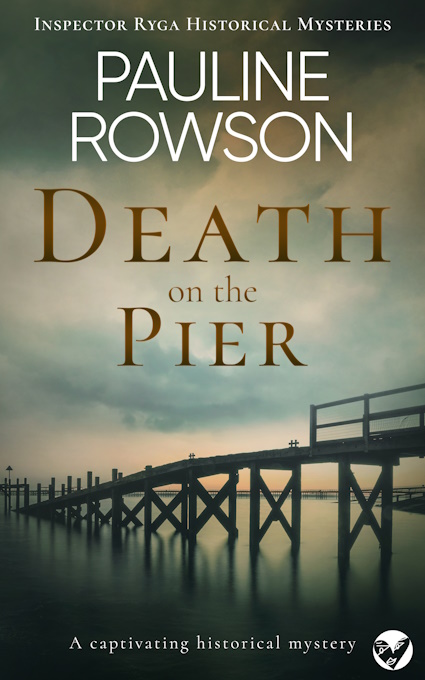
Today, we take a paid holiday almost for granted. Book the accommodation, pack the suitcase, check the weather and decide whether to fly, drive or catch a train.
But when I was researching Death on the Pier, Inspector Ryga's sixth case, I had to remind myself just how different taking a holiday could be in Britain in the early 1950s.
The story takes Ryga to Southend-on-Sea in July 1951, during a heatwave. He has been sent from Scotland Yard to investigate the disappearance of a corpse and soon finds himself caught up in a much more complex crime.
And while Ryga is investigating murder, the seaside around him is doing what seaside resorts have always done: attracting people looking for a break from ordinary life.
The idea of holidays with pay had been developing for years before Ryga arrived in Southend.
The Holidays with Pay Act 1938 was an important step, but it is worth being precise about what it actually did. It enabled wage-regulating authorities to make provision for holidays and holiday remuneration for workers whose wages they regulated. It did not introduce a universal statutory paid holiday for every British worker.
By March 1938, around 7.75 million workers were estimated to have some form of annual consecutive holiday with pay. By the following year that figure had risen to around 9 million.
The war and its aftermath then changed the picture considerably.
By the end of 1948, Hansard recorded that 95 per cent of workers were entitled to holidays with pay. But entitlement and affordability were not necessarily the same thing.
In a parliamentary debate in June 1950, one MP pointed out that, despite the huge increase in people receiving paid holidays, an estimated 10 to 12 million people still could not afford to take a holiday.
That is an important distinction.
You could have a week's wages paid while you were away and still find that the cost of travelling, eating and finding somewhere to stay was beyond your means.
For many working families, a day trip to the seaside was considerably more achievable than a week's holiday away from home.
Hotels existed, of course, but they were not necessarily the obvious choice for an ordinary working family.
Boarding houses and guest houses were common in seaside resorts, with some offering rooms and others full board.
There were also relatives. A family member living near the coast could provide somewhere to sleep, while others might take advantage of inexpensive accommodation or organised holiday schemes.
And then there were the holiday camps.
The large-scale British holiday camp was becoming an established part of seaside life before the war.
One of the pioneers was Captain Harry Warner, who opened his first holiday camp at Northney on Hayling Island in 1931. Northney became the first Warners camp, with accommodation, food, entertainment and activities provided within the camp itself.
That is a particularly interesting connection for me because Hayling Island is also part of the landscape of my DI Andy Horton mysteries.
The same stretch of British coastline that inspired one fictional detective was also helping to shape the way generations of real British families spent their holidays.
But a holiday could still be hard work.
Holiday camps offered an answer to some of the practical problems. Accommodation, meals and entertainment could be brought together in one place. That made the holiday easier to organise and, importantly, more predictable in cost. There was also organised entertainment and somewhere for children to go, giving parents the opportunity to relax.
But not everyone wanted a holiday camp.
Some people preferred the freedom of a boarding house or guest house. Others visited relatives. And for many people, particularly in the immediate post-war years, the simplest option remained a day trip.
The seaside was accessible by train, coach and excursion services, and a day beside the sea could provide the feeling of having escaped ordinary life without the expense of a full week's accommodation.
In Death on the Pier, Ryga is not staying in a smart hotel overlooking the sea.
He finds a room at Marigold House, a four-storey terraced house that has seen better days.
The paint needs attention. The windows and brickwork are showing their age. The curtains are clean, but the building itself is worn.
Inside, however, everything is immaculate.
There is the smell of polish and disinfectant. A polished tiled floor. A hall stand. A brass bell. A ledger and pencil.
And a stony-faced landlady.
His room is equally spotless, but the signs of post-war austerity are everywhere: faded wallpaper, a worn carpet, an old single bed and a mattress that has begun to sag.
It isn't luxurious.
But it is somewhere to sleep.
And that was enough.
“No drink or women allowed. Tea will be at six.”
That, perhaps, tells us as much about Ryga's accommodation as any description could.
He has been sent to Southend to investigate a murder, not to enjoy the holiday.
Yet all around him is a resort full of people doing precisely that.
Or at least trying to.
Because behind the sunshine, the pier, the entertainment and the crowds was a Britain still emerging from war, still conscious of money, rationing and austerity, and where a week's holiday could still be something to save for.
And that was the Britain in which Inspector Ryga found himself investigating Death on the Pier.
Read next: A Day on Southend Pier in 1951
Discover the seaside world into which Inspector Ryga steps in Death on the Pier — from the electric railway and crowds of holidaymakers to the entertainment and atmosphere of Southend Pier. Live on 6 October 2026


Pauline Rowson lives on the South Coast of England and is the best selling author of many crime novels, published by Joffe Books. Her popular crime novels include the DI Andy Horton Solent Murder Mystery series, the Art Marvik mystery thrillers and the 1950s set Inspector Ryga mysteries. Subscribe to her newsletter for all the latest books news.
PLEASE NOTE: Fraudsters can impersonate me by sending false emails claiming that I endorse an interview or book event. That is never the case. If you are in receipt of any emails, messages or text that purport to be from me please ignore them or contact me using the form on this website. I never engage in cold-calling.