


 Search
 No DNA. No CCTV. No computers. So how did detectives solve murders in 1950s Britain?
Before computers, databases and forensic DNA, Scotland Yard detectives relied on observation, interviews, patience and experience.
And the local bobby. He knew everyone, noticed what didn't belong and often held the first vital clue.
Read more below about policing and criminal investigations in Inspector Alun Ryga's World in 1950s Britain.
It was common practice for Scotland Yard detectives to be called in to help investigate and indeed take charge of crimes around the country. At a moment’s notice detectives could be on a train heading towards a town, city or village where a crime had been committed that the local forces needed assistance with. This elite unit from Scotland Yard was created in 1907 by Home Secretary, Herbert Gladstone, and became known as The Murder Squad.
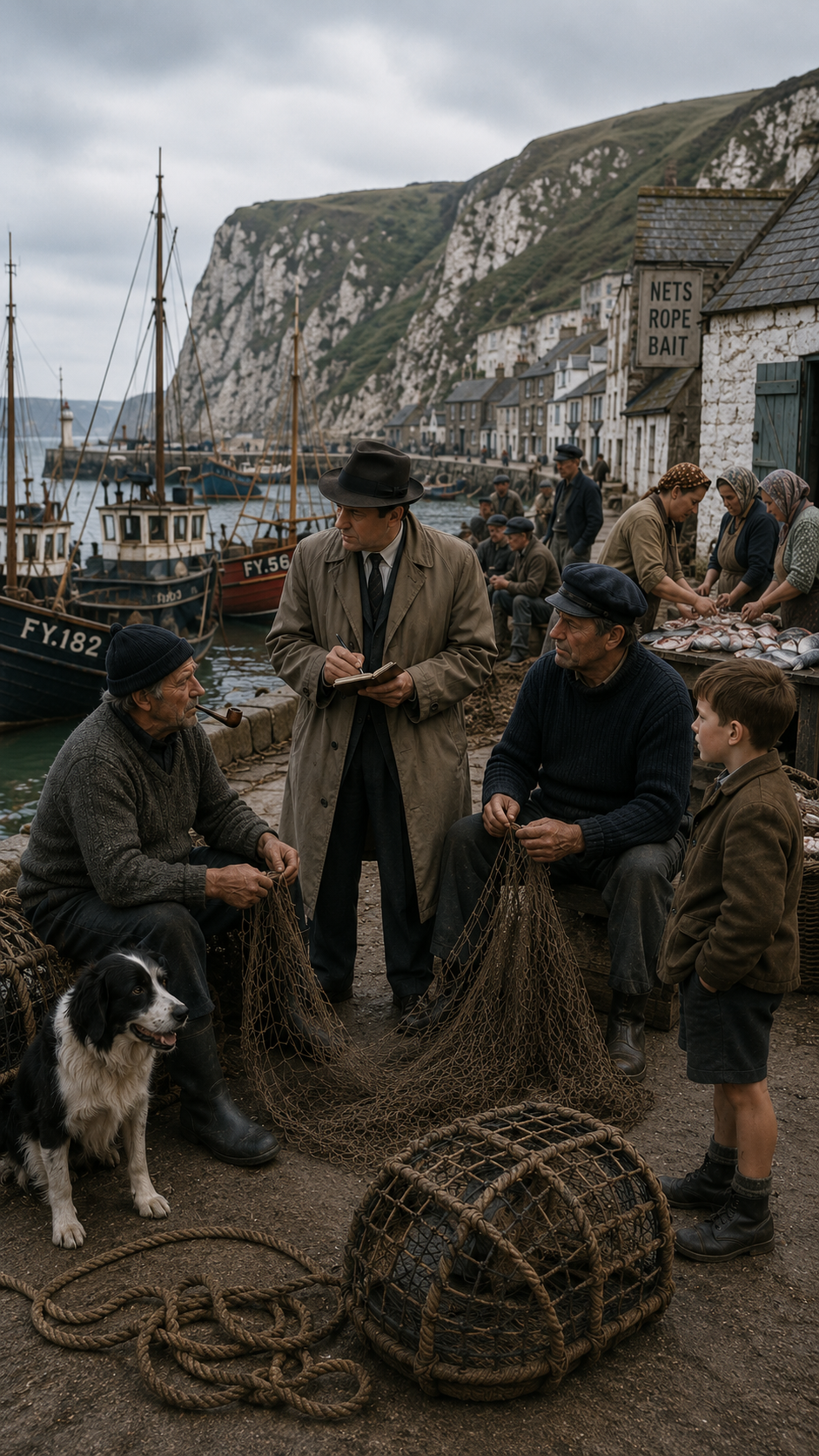 Inspector Ryga is part of The Murder Squad, a specialist in solving baffling coastal crimes. His background as an ex Merchant Navy seaman means he understands the sea, and those who work, live and play around and on it. His sidekick, Sergeant Jacobs of the Yard, stays in London while Ryga teams up with, and works with other police officers in the towns, ports and bays where his investigations take him.
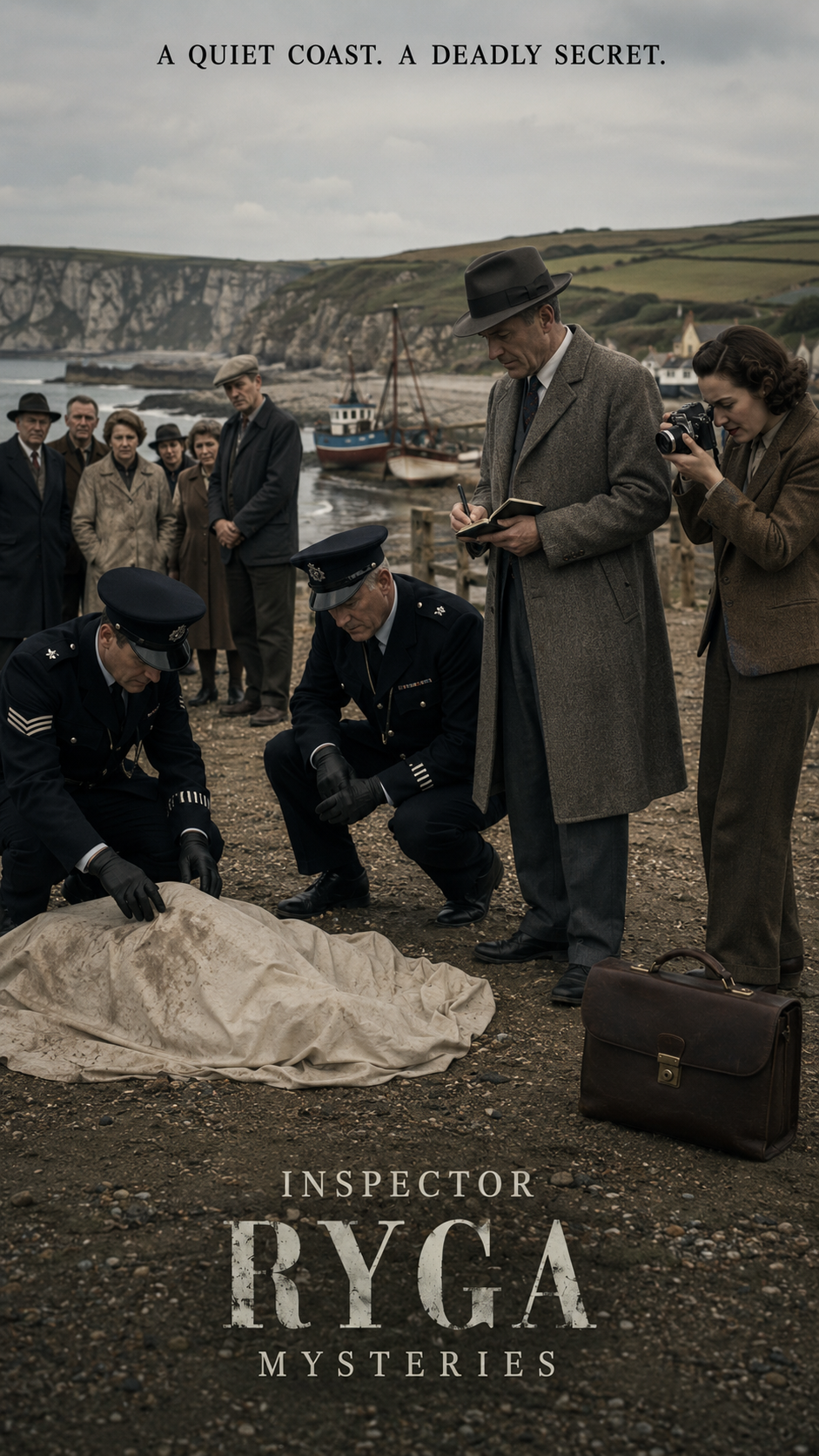
In 1950 often the police themselves took photographs at the crime scene. Civilian photographers weren’t introduced until 1955 and then not in all places. So Ryga bucks the trend and teams up with war photographer and photojournalist, Eva Paisley, in 1950, whom he meets on his first investigation outside of London. He uses her expertise as a photographer and her ‘third eye’ to help solve the crime of who killed the man in the pin striped suit whose body is found in the isolated Church Ope Cove on the Royal Island of Portland, Dorset in DEATH IN THE COVE.
In the 1950s there were no specialist crime scene officers, so this is vastly different to today’s crime dramas. CSI Specialists were introduced in 1968, although some forces had them before that time but not in the fifties.
The Metropolitan Police Forensic Science Laboratory was set up in 1934 and there were small police laboratories in Cardiff, Bristol, Nottingham and Birmingham. Scientific support for police prosecutions was little used and consultants, called public analysts, were called in on an ad hoc basis. In 1950 Home Office Analysts were being used until their role died out in 1954 when their work was taken over by the laboratories.
In 1950, Inspector Ryga would take with him his Murder Bag. This was developed by Pathologist, Bernard Spilsbury (later Sir Bernard Spilsbury), who, after the 1924 high profile Mahon/Kaye case when he found detectives handling the dismembered remains of Emily Kaye (murdered by Mahon), with their bare hands, expressed the view that police officers should wear gloves to save them being exposed to infection. His concern inspired the introduction of the Murder Bag/Case.
In Ryga’s Murder Case, Ryga has rubber gloves, a magnifying glass, a tape measure, a ruler, swabs, sample bags, forceps, scissors, a scalpel, and other instruments. The Murder Bag remained in use until Crime Scene Investigators were introduced in 1968.
In rural areas the police presence often only consisted of a ‘Bobby on a bicycle’ but in towns where there was a sergeant or inspector they often used their own cars for which they received an allowance.
In the 1930s the Met was using Area Wireless Cars’ crewed by CID officers and trained drivers and operators (you can see these in operation in some British films of the period).In more rural areas motor patrols would arrive at a phone box at a fixed time and check in. By the end of the 1940s car fleets began to expand equipped with VHF wireless but not all had them, not in fact until the mid-1960s.
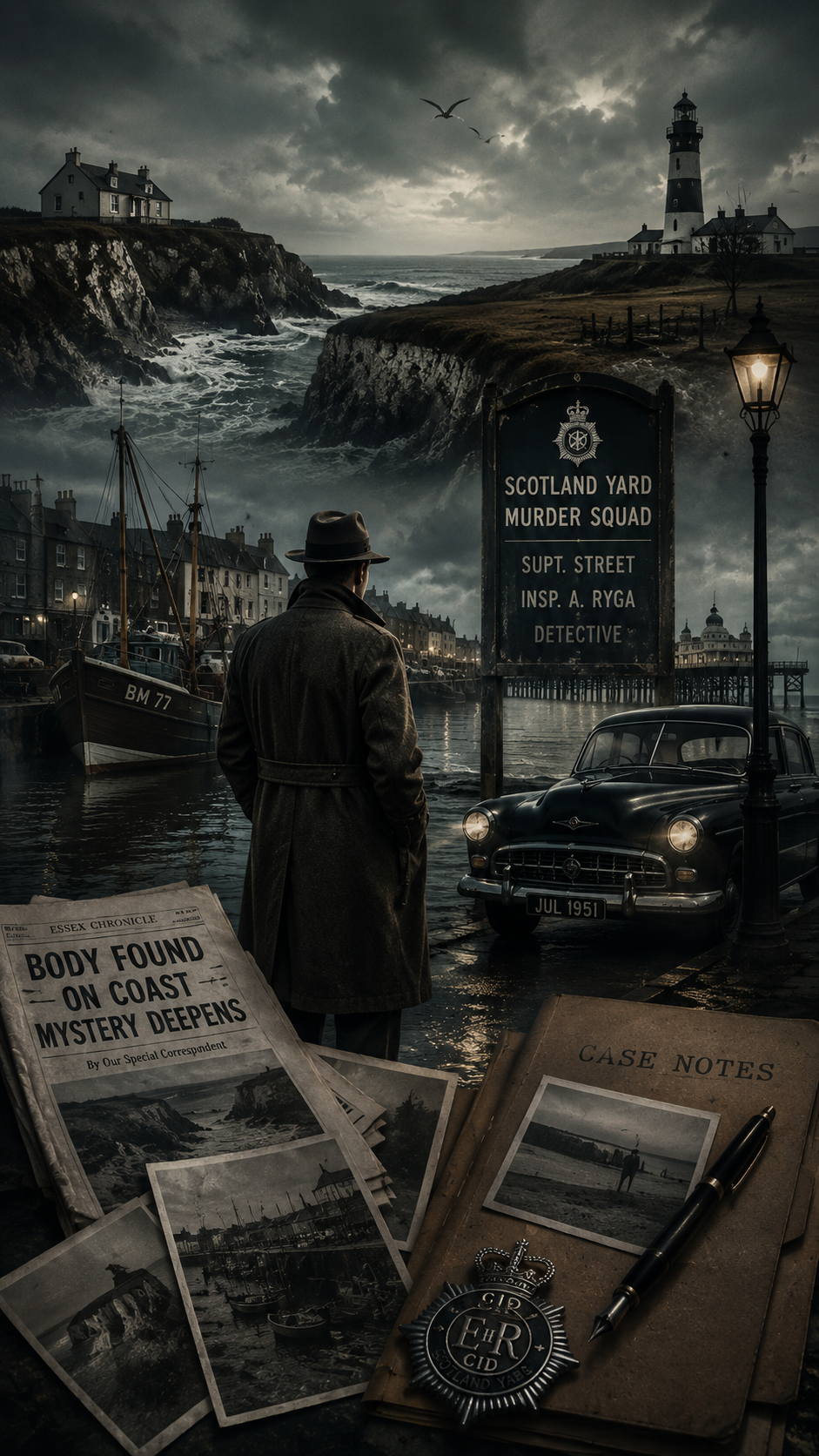 A very different world to today!
I hope you enjoy reading the Inspector Ryga mysteries and immersing yourself in his world and investigations.


Pauline Rowson lives on the South Coast of England and is the best selling author of many crime novels, published by Joffe Books. Her popular crime novels include the DI Andy Horton Solent Murder Mystery series, the Art Marvik mystery thrillers and the 1950s set Inspector Ryga mysteries. Subscribe to her newsletter for all the latest books news.
PLEASE NOTE: Fraudsters can impersonate me by sending false emails claiming that I endorse an interview or book event. That is never the case. If you are in receipt of any emails, messages or text that purport to be from me please ignore them or contact me using the form on this website. I never engage in cold-calling.